
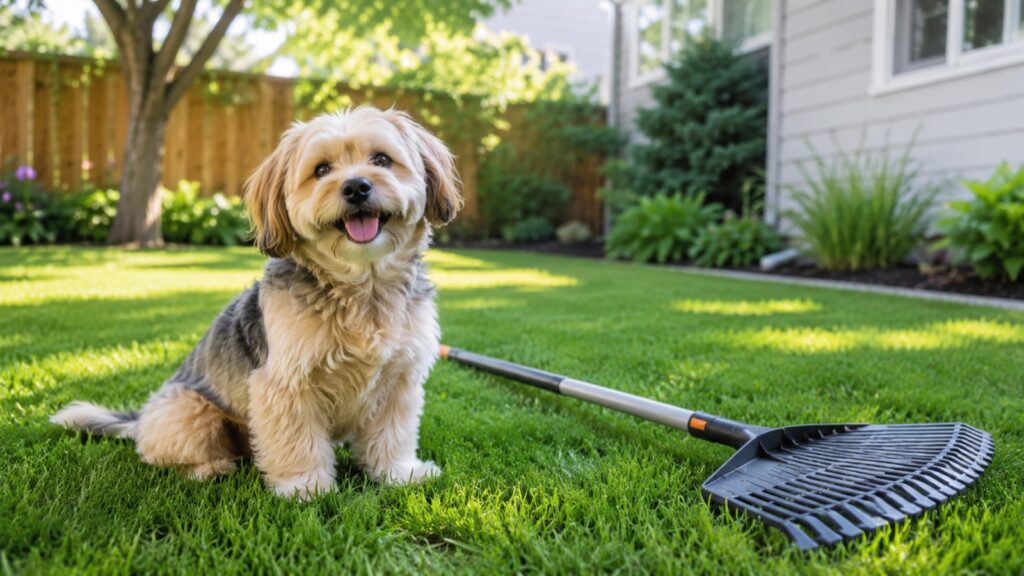
There is a moment every dog owner in a northern state knows too well. The last snowbank retreats from the corner of the yard, the first warm Saturday arrives, and there it is: an entire winter’s worth of deposits, preserved by the cold and revealed all at once like some grim archaeological dig. Snow does not make waste disappear; it stores it. December through March simply accumulate, layer by layer, until the thaw presents the bill in full.
The instinct is to avoid the yard for another few weeks and hope for rain, but that is precisely backward. The window between snowmelt and the first mowing is the single most important cleanup period of the year — for your lawn’s recovery, your family’s health as outdoor season begins, and your own sanity once the ground softens and everything gets worse. What follows is a realistic weekend battle plan: gear, technique, disposal, and the lawn-repair steps that turn a rough April yard into a great June one.
Why the Thaw Is a Deadline, Not a Suggestion
Freezing pauses decomposition but kills almost nothing. Roundworm and whipworm eggs overwinter easily, and the moment temperatures climb, months of accumulated bacteria begin leaching into saturated spring soil all at once — exactly when kids and pets return to the grass. Melting snow then delivers that concentrated runoff into storm drains during the wettest weeks of the year.
The lawn has its own deadline. Grass emerging from dormancy is at its most vulnerable, and every deposit left in place smothers the crowns beneath it and delivers a nitrogen scorch to turf too weak to buffer it. Clear the yard before green-up and the lawn recovers on its own; wait until May and you are reseeding instead.
Pick Your Weekend and Read the Ground
Timing within the season matters. The ideal window is after the snow is fully gone but while the ground is still firm and cool — cold waste is dramatically easier and less unpleasant to collect than what a seventy-degree afternoon produces. Check the forecast for a dry stretch of two or three days; working a waterlogged yard compacts spring soil and turns pickup into smearing.
Walk the property first without tools and simply map it. Winter deposits concentrate wherever the shoveled paths were — dogs go where they can walk — so expect dense clusters along walkways, near the door, and at the fence line rather than an even scatter. Ten minutes of reconnaissance saves an hour of wandering.
Gear Up for Volume, Not a Daily Pickup
Spring cleanup is a bulk operation, and daily-walk equipment is not built for it. The tool that matters most is a stand-up scooper you can operate for an hour without bending — a Pooper Scooper with Bag service built into the design means the disposable bag itself does the collecting, so the tool stays clean through dozens of pickups and there is nothing to hose off when you finish. Your back will register the difference by the second quadrant of the yard.
Bags are the other half of the equation. A winter’s accumulation from even one large dog can run to several gallons of volume, so stock up on heavy Dog duty Bags — the oversized, thick-walled type made for exactly this kind of haul — before you start. Nothing derails a cleanup morning like a standard sandwich-sized bag failing at maximum load halfway across the yard. Round out the kit with waterproof gloves, dedicated boots you can disinfect, and a lined bucket for shuttling sealed bags to the bin.
Work the Grid: Technique for the Big Clean
Divide the yard into quadrants and clear one completely before moving on — the finished sections provide visible progress that keeps morale up, and you will never lose track of where you have been. Within each quadrant, walk slow parallel passes with the sun at your back, since low spring light throws shadows that make older, flattened deposits far easier to spot. Partially decomposed material lifts best with a sliding scoop along the ground rather than a pinch from above.
Take a break between quadrants and resist the urge to rush the last one; the far corner you skim is the one the dog will find first. A typical quarter-acre yard with one winter’s accumulation takes ninety minutes to two hours done properly — schedule it like the real project it is, with a podcast queued.
Disposal, Sanitizing, and the Finish Line
Seal everything in double-knotted bags and get it into the outdoor trash the same day; a porch full of collected waste is only a relocated problem. Most municipalities want pet waste bagged and landfilled — check before burying or composting, and never add it to compost destined for a vegetable garden, since backyard piles do not reach parasite-killing temperatures. Finish by disinfecting boots and tools with an accelerated hydrogen peroxide or dilute bleach solution, away from the lawn.
Then service the high-traffic zones: a garden-hose rinse dilutes lingering urine nitrogen along the old shoveled paths, and a rake-through fluffs matted grass so air and light reach the crowns again.
Repair, Reseed, and Set Up a Better Winter
With the yard clear, spring repair is straightforward: rake out dead patches, top-dress with a thin layer of compost, and overseed the burn spots once soil temperatures support germination. Where winter traffic plus waste created compacted dead zones, rent or borrow a core aerator — or bring in help for the heavy step, applying the same diligence you would to any contractor and choosing quality service providers with real local reviews rather than the first flyer on the mailbox.
Finally, learn the season’s lesson. Next winter, keep one shoveled path to a designated potty area and do a quick pickup during every thaw. Owners who scoop even twice a month through winter report spring cleanups measured in minutes, not weekends.
Key Takeaways
- Snow stores waste all winter; the thaw releases months of bacteria into soil at once.
- Clean before green-up, while deposits are cold and firm and grass is still dormant.
- Winter deposits cluster along shoveled paths — map the yard before you start.
- Use a stand-up, bag-based scooper and oversized tear-resistant bags built for volume.
- Work in quadrants with the sun at your back; budget up to two hours for a typical yard.
- Rinse, rake, overseed, aerate — then keep a winter potty path to shrink next year’s job.
Before the First Barbecue
Spring yard cleanup is nobody’s favorite Saturday, but it is the gateway chore of the whole outdoor season: everything you want from the yard — barefoot kids, backyard dinners, a dog rolling in healthy grass — sits on the other side of those two honest hours. Done early and done right, it is also the last big cleanup effort of the year, replaced by the easy rhythm of quick daily pickups.
So watch the forecast, stage the gear by the door, and claim the first dry weekend before the grass wakes up. By the time the neighbors are still staring at their own thawing yards in dismay, yours will already be green, safe, and open for the season.