
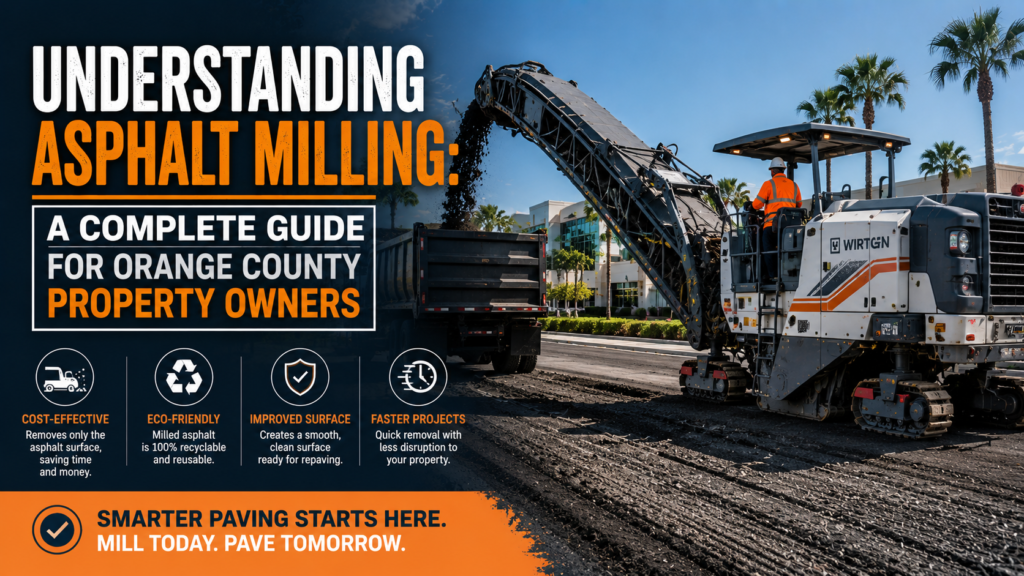
If you have ever driven down a road in Orange County and noticed a crew grinding away the top layer of pavement before repaving, you witnessed Asphalt Milling Orange County in action. This process is one of the most widely used and environmentally responsible techniques in modern pavement rehabilitation. Whether you manage a commercial property, oversee municipal roads, or simply want to understand how asphalt maintenance works, this guide will walk you through everything you need to know about asphalt milling.
What Is Asphalt Milling?
Asphalt milling also known as cold milling, cold planing, or pavement profiling is the process of mechanically removing the top layer of an existing asphalt surface to a specified depth. Unlike full-depth removal, milling targets only the deteriorated or damaged surface layer while leaving the underlying base structure intact. The result is a clean, textured surface ready to accept a fresh overlay or undergo further rehabilitation.
The process is performed using specialized machines called cold planers or milling machines. These powerful pieces of equipment feature a large rotating drum equipped with hundreds of carbide-tipped cutting teeth. As the drum spins and contacts the asphalt surface, it grinds the material into small fragments. A built-in conveyor system then loads the milled material known as reclaimed asphalt pavement, or RAP into waiting trucks for transport and recycling.
How Does the Asphalt Milling Process Work?
The asphalt milling process follows a carefully orchestrated series of steps designed to maximize precision, safety, and efficiency.
- Assessment and Planning: A qualified pavement technician inspects the existing surface to evaluate the type and extent of damage, determine the appropriate milling depth, and identify any drainage issues or grade changes needed.
- Equipment Calibration: The milling machine is precisely set to the required removal depth. Modern machines use laser-guided systems, string lines, or automated controls to maintain the target elevation within extremely tight tolerances.
- Water Application and Dust Control: Before and during milling, water trucks spray the work area to suppress dust and cool the rotating drum, keeping the operation clean and compliant with air quality regulations.
- Controlled Milling: The machine advances at a controlled speed typically between 20 and 60 feet per minute while the drum grinds the asphalt surface in an upward-cutting direction. The milled material is automatically channeled to a conveyor belt.
- Material Collection: The RAP is loaded onto dump trucks and hauled to an asphalt recycling facility for processing and reuse.
- Surface Preparation: After milling, crews sweep and clean the textured base. The milled surface is grooved and rough, which dramatically increases the bonding area for the new asphalt overlay, producing a more durable finished product.
The depth of milling varies widely by project. Shallow surface milling may remove as little as one inch to address minor surface defects, while full-depth milling can remove several inches to address structural issues in the pavement layers.
What Is Micro-Milling?
Micro-milling is a specialized form of the standard milling process. It uses a drum with a higher density of cutting teeth, which produces a much finer surface texture compared to conventional milling. Micro-milling typically operates at shallow depths generally one inch or less and is used primarily as a preventive maintenance measure. It is ideal for removing old surface treatments, smoothing out minor roughness, and preparing a surface for thin overlays or pavement markings. Because it addresses surface defects before they worsen, micro-milling is considered a proactive maintenance strategy rather than a reactive repair method.
What Pavement Problems Does Asphalt Milling Address?
Asphalt milling is particularly effective at correcting a wide range of pavement distresses that commonly affect roads, parking lots, and driveways in Southern California. These include:
- Cracking: Surface cracks and alligator cracking compromise pavement integrity and allow water to penetrate and weaken the base. Milling removes the damaged layer and eliminates pathways for water infiltration.
- Rutting: Low spots and depressions caused by repeated traffic loads create uncomfortable and potentially hazardous driving conditions. Milling restores a uniform surface grade.
- Raveling: When the aggregate in asphalt begins to separate, the surface becomes rough and progressively deteriorates. Milling removes the raveled layer and the recycled material becomes the aggregate for new paving.
- Bleeding and Flushing: Excess asphalt binder rises to the surface during hot weather, creating a slick, oily film that reduces skid resistance. Milling removes this hazardous layer.
- Grade and Drainage Corrections: When a road or parking lot needs to be re-graded for proper water runoff, milling allows contractors to reshape the surface profile without disturbing the base.
- Elevation Management: Roads that have been paved over multiple times can become elevated to a point where they interfere with curbs, drainage inlets, or adjacent structures. Milling returns the surface to its proper elevation.
The Environmental Benefits of Asphalt Milling
One of the most compelling aspects of asphalt milling is its strong environmental profile. Unlike many construction processes, milling is inherently green. The reclaimed asphalt pavement generated during milling is among the most recycled materials in the United States. RAP can be incorporated into new hot mix asphalt, used as base or sub-base aggregate, applied as a stabilized base material, or repurposed as fill or embankment material.
Because milling reuses existing materials rather than discarding them, it reduces the volume of waste sent to landfills, decreases the demand for new raw materials like virgin aggregate, and lowers the energy required to produce fresh asphalt. The cold milling process itself is also environmentally favorable because it does not require heating the pavement, which means fewer emissions during the removal phase. For property owners and municipalities in Orange County who are mindful of sustainability goals, asphalt milling represents a responsible choice for pavement maintenance.
Asphalt Milling vs. Full Pavement Replacement
A common question among property owners is whether to mill and overlay or to remove and replace an asphalt surface entirely. The answer depends on the condition of the existing pavement and its structural base. Milling is the preferred approach when the base layer remains stable and intact. If the pavement suffers from surface-level deterioration such as cracking, rutting, or roughness, but the sub-base structure is sound, milling followed by a fresh overlay extends the life of the pavement significantly at a fraction of the cost of full replacement.
Full replacement becomes necessary when structural damage extends deep into the base or subgrade layers, when extensive subsurface failures are present, or when the pavement has exceeded its service life beyond the reach of surface rehabilitation. A professional assessment by an experienced pavement contractor is the most reliable way to determine which approach is appropriate for a specific project.
Common Applications of Asphalt Milling in Orange County
Asphalt milling is used across a broad range of project types throughout Orange County, including:
- Municipal and county road resurfacing programs
- Commercial parking lot rehabilitation
- Private driveway restoration
- Bridge deck rehabilitation
- Airport runway and taxiway maintenance
- Highway overlay preparation
- Grade correction for ADA compliance in parking areas
- Utility trench resurfacing
Orange County’s warm Mediterranean climate means that pavement is subjected to intense UV radiation and temperature cycling year-round. These conditions accelerate surface oxidation and cracking, making asphalt milling a frequently needed maintenance tool across the region.
What Happens After Milling?
Once milling is complete, the freshly exposed surface is swept clean and inspected. Depending on the project scope, the next step may be a full-depth repair of any localized failures in the base, followed by the application of a tack coat a thin, adhesive layer of emulsified asphalt that bonds the existing base to the new overlay. The new asphalt mix is then laid, compacted with heavy rollers, and allowed to cool before the road or lot is returned to service.
The grooved texture left by the milling drum is actually an advantage in this process. It creates far greater surface area for bonding compared to a smooth surface, which significantly improves the durability and adhesion of the new overlay. This is one of the reasons why milled and overlaid pavements consistently outperform surfaces where new asphalt has been applied over an unmilled base.
Specialty Milling Techniques
Beyond standard surface milling, several specialty techniques are used for specific engineering needs. Rumble strips are often formed by milling shallow, periodic grooves into the shoulder of a highway to alert distracted drivers. Dowel bar retrofitting in concrete pavement uses specially configured milling heads to cut precise slots for reinforcement. Each of these applications demonstrates how versatile and adaptable the milling process is for a wide range of civil infrastructure challenges.
Conclusion
Asphalt milling is a cornerstone of modern pavement maintenance in Orange County and throughout Southern California. It is efficient, precise, cost-effective, and environmentally responsible. By removing only the damaged surface material while preserving the structural integrity of the base, milling extends pavement service life, improves safety, and reduces the long-term burden on public and private infrastructure budgets. Understanding this process helps property owners and project managers make informed decisions about pavement maintenance, and ensures that Orange County’s roads, driveways, and parking lots continue to serve communities effectively for years to come.